
The Humpback Highway Opens
Every winter, something remarkable happens off the coast of Jervis Bay. As the coastal wattles burst into bloom, the Humpback Highway opens once again and tens of thousands of humpback whales begin passing our coastline on one of the longest migrations on earth. Travelling between Antarctica and the warm breeding grounds of the Great Barrier Reef, these giants move through the waters of the NSW South Coast in numbers that are difficult to comprehend - and for a few extraordinary months each year, we are lucky enough to share the ocean with them.
From the Brink of Extinction
What makes this migration even more remarkable is that, not long ago, humpback whales were pushed to the brink of extinction. At the height of industrial whaling, populations along Australia's east coast were reduced to an estimated few hundred individuals. Today, their extraordinary recovery stands as one of conservation's greatest success stories — a testament to strong science, environmental protection, and decades of conservation efforts. The return of the humpback has not only restored a vital part of the marine ecosystem but also transformed coastal communities, bringing millions of dollars in eco-tourism revenue to regional towns. It is powerful proof that protecting wildlife and supporting local economies can go hand in hand.
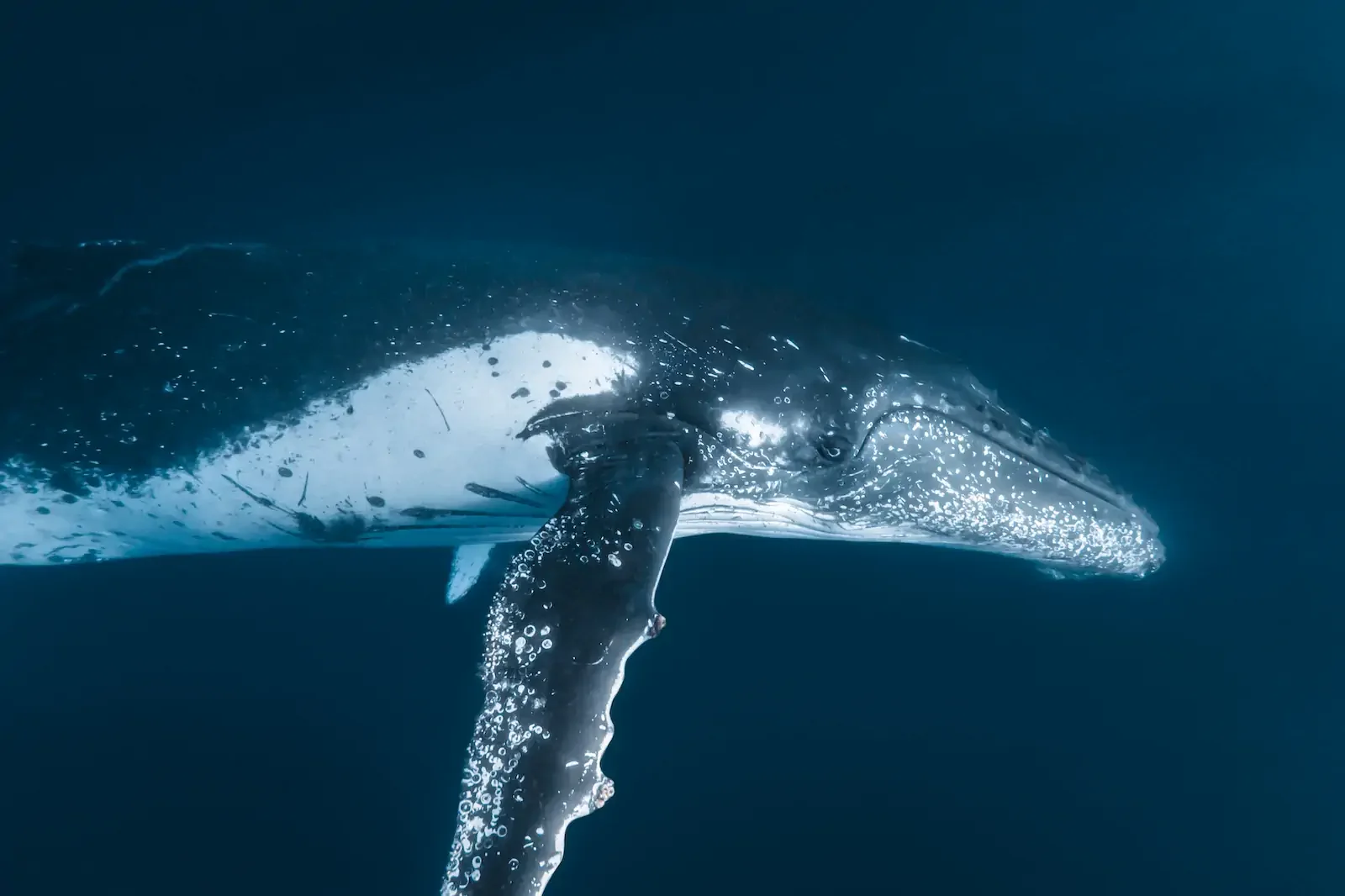
At Woebegone Dive, whale season has become the heartbeat of our winter. What began as a freediving school in Jervis Bay has evolved into something much bigger: a family business built around meaningful experiences in the ocean, genuine marine conservation, and creating encounters that leave people forever changed.
More Than Whale Watching
Our whale swims are at the centre of that story. Unlike traditional whale watching, this is not an experience viewed from the railing of a crowded boat. This is an in-water encounter with humpback whales - entirely on their terms. Every interaction is governed by strict permit conditions, ethical operating procedures, and an enormous respect for the animals themselves. There are only two operators permitted to conduct whale swims in New South Wales, and Woebegone Dive is proud to be one of them.
Why Jervis Bay
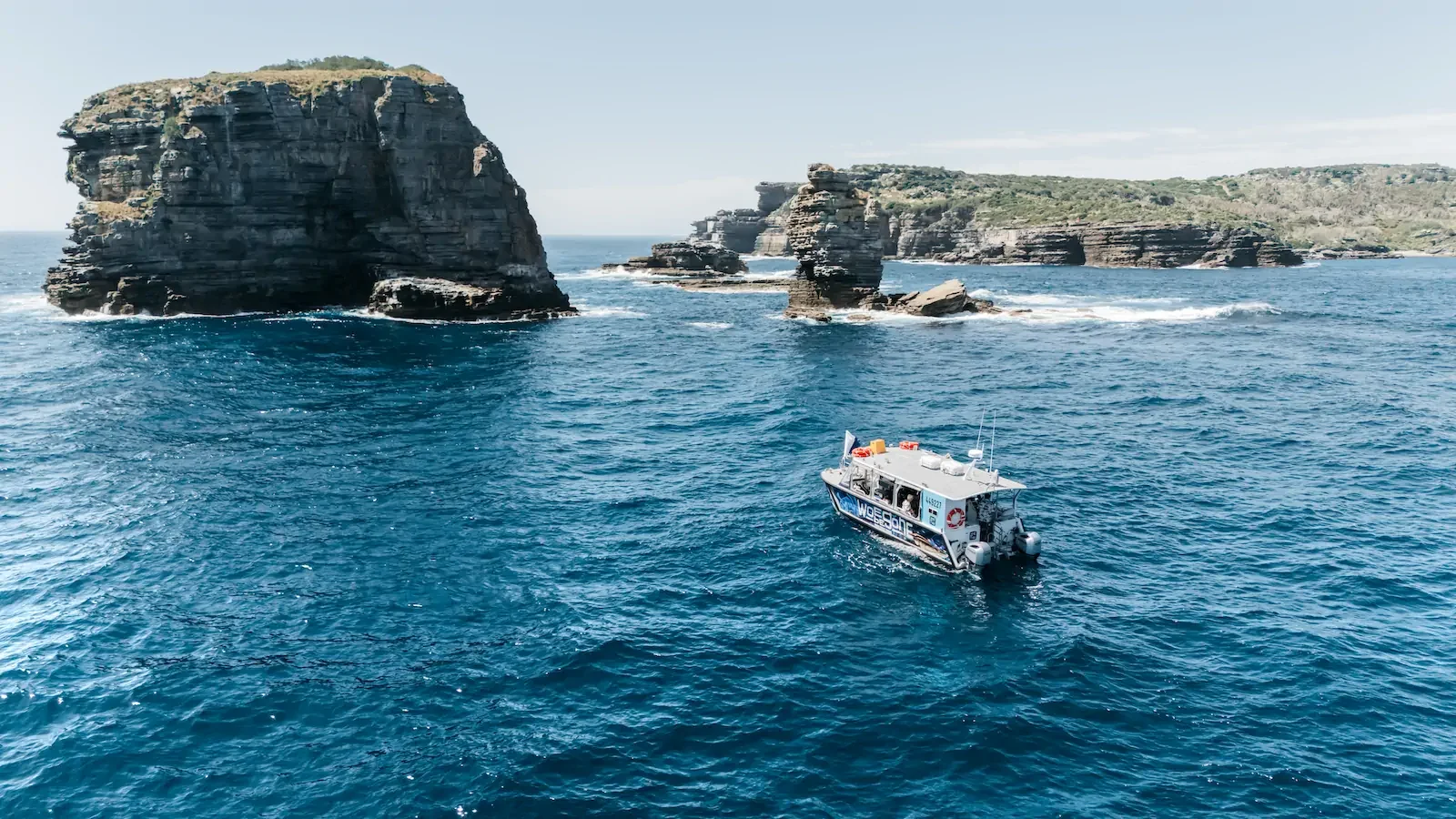
What makes Jervis Bay such a unique place for these encounters is geography. The bay sits roughly halfway along the migration route, and its calm, protected waters offer whales a place to rest during their journey. Uniquely, Jervis Bay protrudes from the NSW coastline like a giant baseball glove scooping whales in from the open ocean as they travel north and south. As one of the deepest natural harbours in Australia, the bay provides sheltered waters close to the continental shelf, creating an ideal resting point along the Humpback Highway.
Two Migrations, Two Stories
Early in the season, from May through July, the northern migration brings energetic whales travelling with purpose towards Queensland. Offshore, warmer eddies spun off from the East Australian Current attract younger males into the area, where they jostle with one another, compete for dominance, and put on spectacular mating displays. Breaching, tail slapping, and charging along the surface are common sights as the whales show off their strength and stamina.
Later in the year, from September through November, the southern migration sees the mothers and babies - referred to as cows and calves - resting in the sheltered waters before continuing south towards Antarctica. They often hug the coastline, communicating in lower frequencies that blend with the ambient noise of waves and shoreline, helping them remain less detectable to predators such as orcas. Nearby, a male escort will often shadow the pair. He is not technically the father, but he is putting in the hard yards, protecting the cow and hoping for a mating opportunity next season.
During this journey south, the mother is not simply travelling; she is raising and teaching her calf while nursing it almost constantly. Humpback milk is extraordinarily rich - often described as having the consistency of toothpaste due to its high fat content - allowing the calf to consume up to 500 litres per day and gain as much as 50 kilograms every 24 hours. It is one of the fastest growth rates in the animal kingdom. At the same time, the calf is learning how to behave like a whale — how to surface and breathe efficiently, conserve energy, navigate swell and currents, and even control its buoyancy in the water column. Watching these interactions unfold in the wild offers a rare glimpse into the intelligence, social complexity, and tenderness of these enormous animals.
Meet the Woebe-Wan
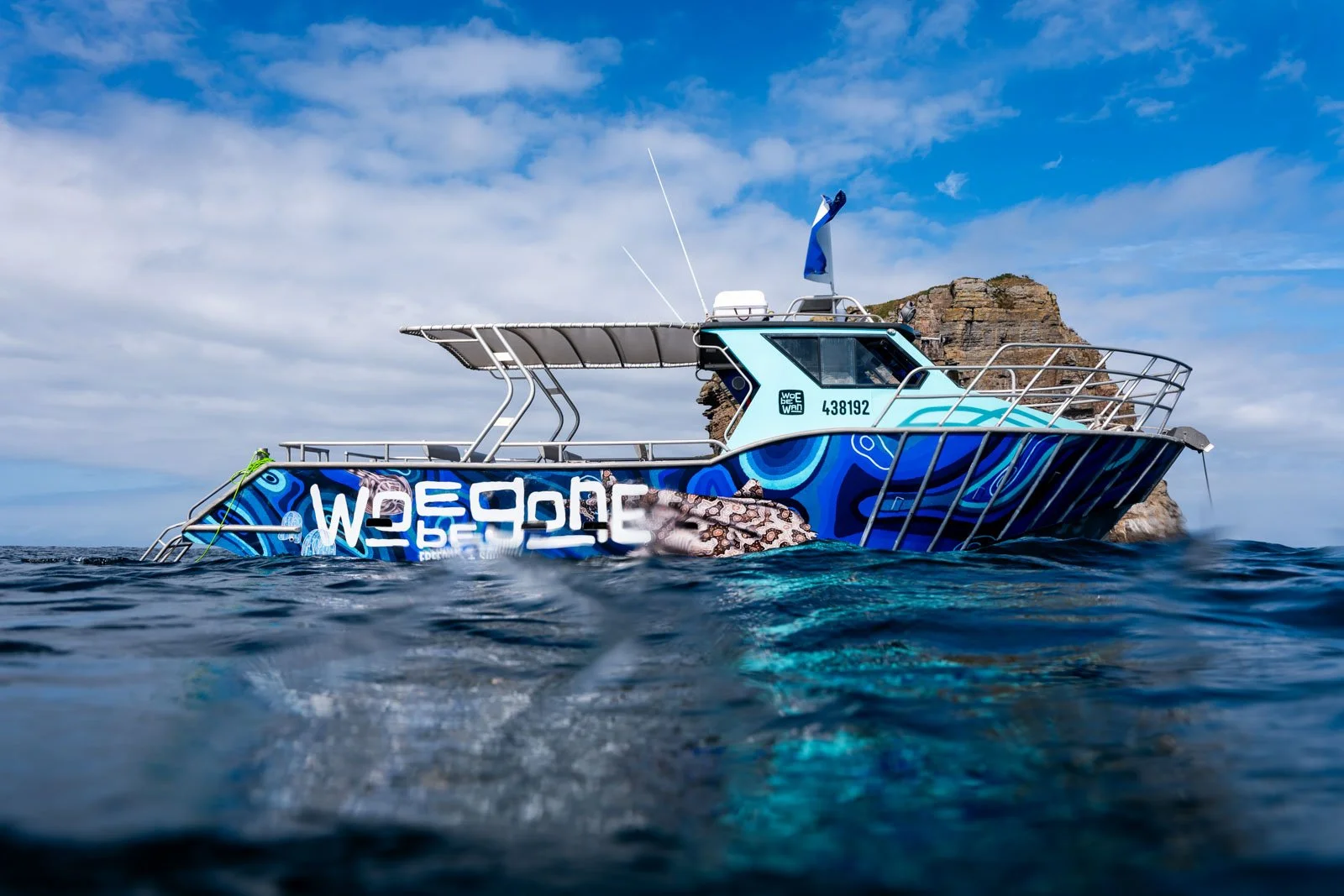
Of course, none of this happens without the right vessel. Our whale swim boat, the Woebe-Wan (named after the Jedi Master Obi-Wan), was purpose-built for offshore exploration. Powered by twin inboard V6 diesel engines, the Woebe-Wan is fast, reliable, and remarkably fuel efficient - essential qualities when covering large distances searching for wildlife inside the Jervis Bay Marine Park. Surveyed for small groups, the experience on board feels personal and unhurried. There is time to watch the whales properly, and the flexibility to follow conditions rather than a rigid schedule.
We Never Chase Whales
The philosophy behind these encounters is simple: we never chase whales. Every interaction is conducted under strict permit conditions and with full consideration of the NSW Biodiversity Conservation Act, ensuring the welfare of the animals always comes first. Rather, we observe their movements and breathing patterns, position ourselves carefully, shut the engines down, and wait. What happens next is entirely on the whale's terms.
What It Feels Like
When a curious humpback decides it wants to investigate, the experience is almost impossible to describe. Sometimes they linger beneath swimmers in water deeper than 100 metres, suspended effortlessly in the deep blue. Staring down into that vast ocean makes you feel incredibly small and insignificant - yet somehow, at the same time, everything suddenly makes sense. The noise of daily life disappears. Problems, stress, and worries dissolve into the blue around you. There is only the sound of your breathing, the open ocean, and the presence of an animal so enormous and intelligent that it completely shifts your perspective for a moment.
For many guests, that first close encounter with a whale becomes genuinely life changing, one of those rare experiences that stays with you forever.
More Than Humpbacks: The Seals of the Drum and Drumsticks
Yet whale season in Jervis Bay brings more than humpbacks. At the very same time the whales are moving through the bay, Australian and New Zealand fur seals gather around the dramatic rock island known as the Drum and Drumsticks. Unlike whales, seals possess an endless curiosity. They barrel-roll through bubbles, tug gently at fins, and dart around divers with impossible agility. Watching them underwater is like watching the ocean's version of dogs - playful, mischievous, and completely captivating.
Can We Scuba Dive With Them? Now, Yes
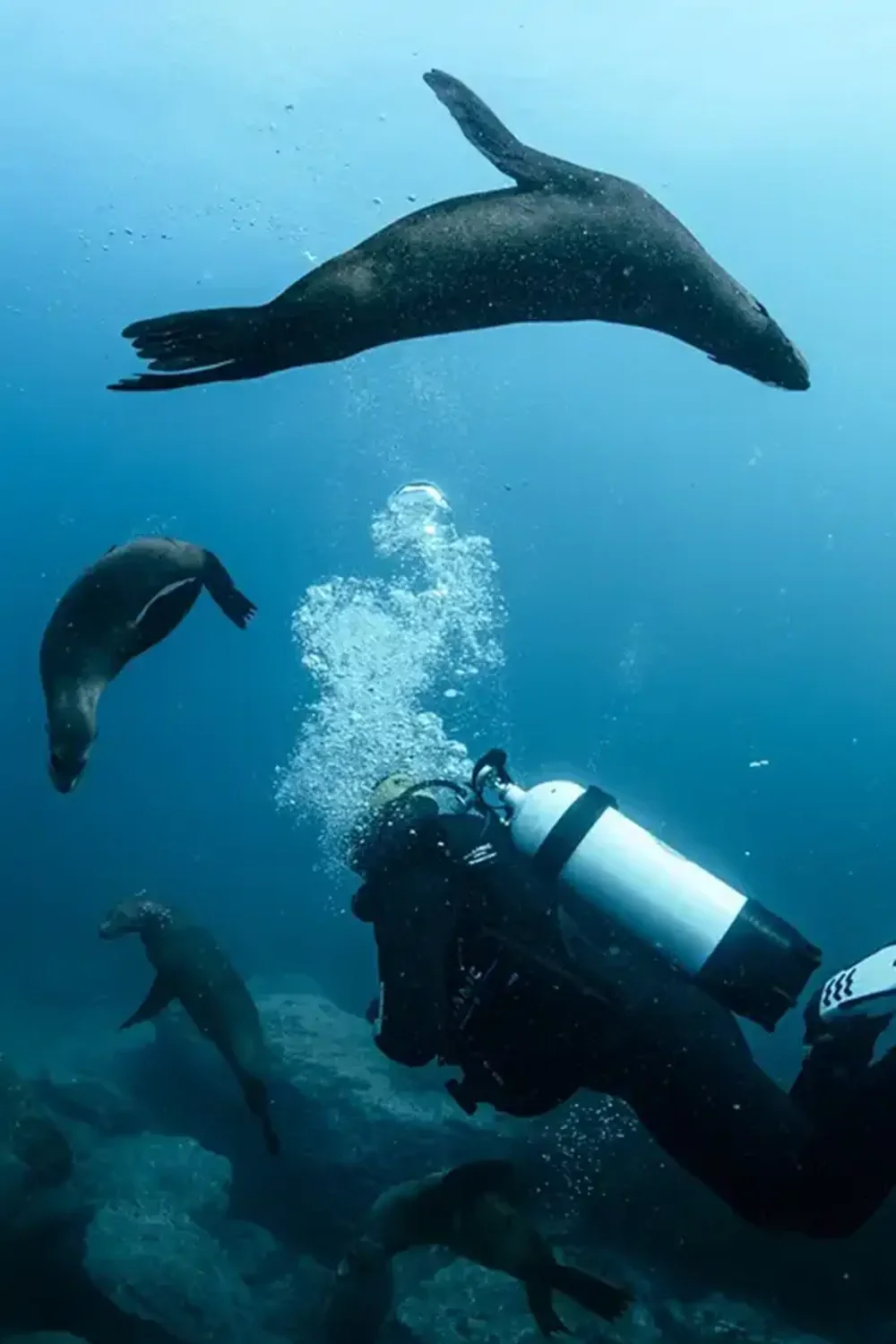
For years, many of our freedivers asked the same question after swimming with the seals: "Can we scuba dive with them?" Now, finally, the answer is yes. This season marks an exciting new chapter for Woebegone Dive as we officially expand into scuba diving experiences and training. While freediving remains at the heart of what we do, scuba diving opens the underwater world to an entirely different audience and allows for longer, more immersive wildlife encounters.
Introducing the Woebe-Two
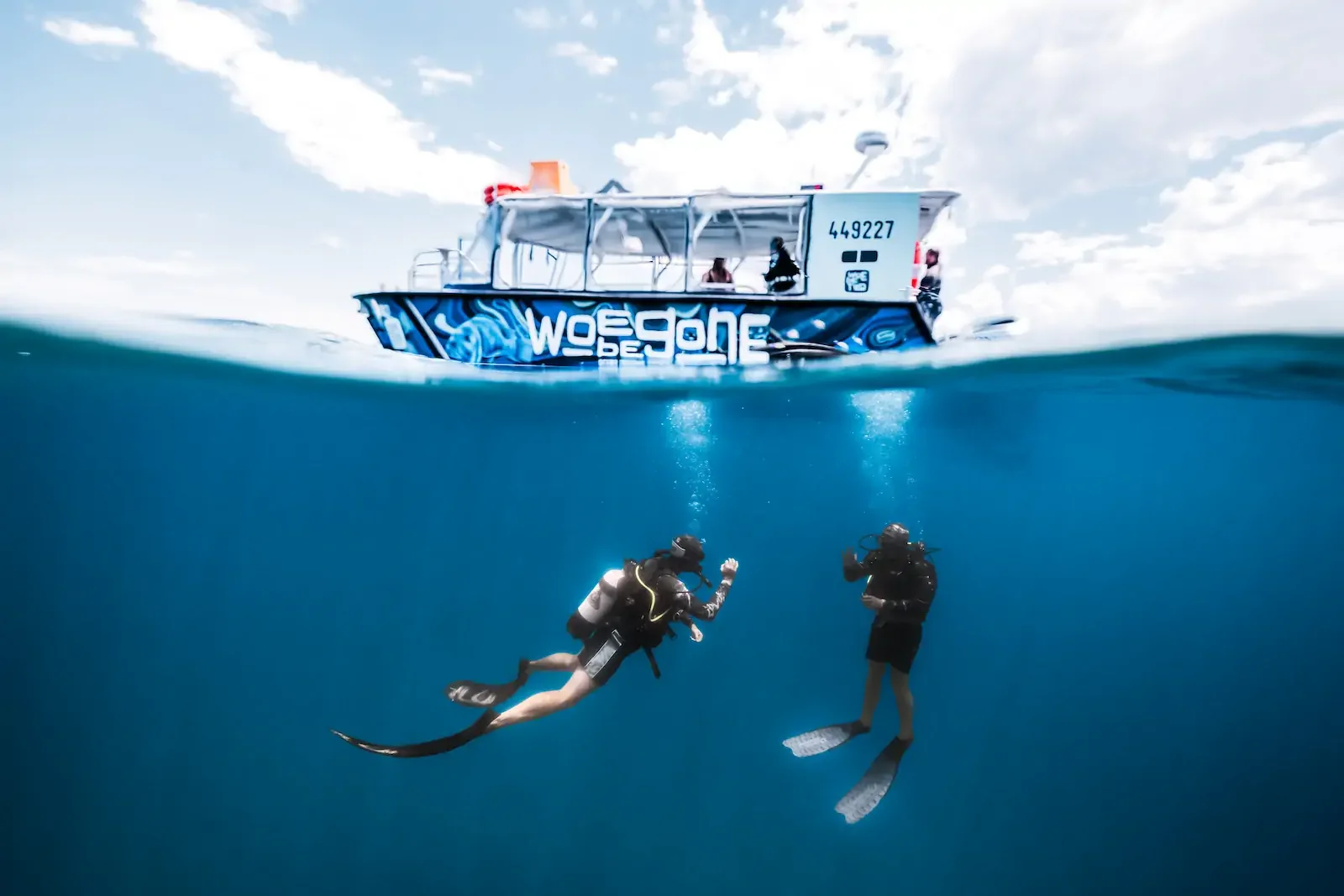
To support this growth, we recently introduced the Woebe-Two - our dedicated scuba diving vessel. The Woebe-Two is a catamaran with twin outboards, specifically fitted out for scuba diving operations. Stable, spacious, and fitted out with the necessary safety systems and dive infrastructure, it allows us to comfortably run scuba diving experiences in offshore conditions while maintaining the relaxed atmosphere people have come to associate with Woebegone Dive. The extra stability of the catamaran design is particularly valuable on longer runs out to seal colonies and offshore dive sites, making the experience more comfortable for both new and experienced divers alike.
Our scuba operations now include guided seal dives, local reef and wreck dives, introductory experiences for beginners, and full scuba certification courses. For many guests, it is the perfect progression from whale swims and snorkelling into a deeper exploration of the underwater world.
Conservation Beyond the Brochure
Importantly, this expansion into scuba diving has not changed the core values of the business. Safety, conservation and marine stewardship remain central to everything we do. Woebegone Dive works alongside organisations such as ORRCA - the Organisation for the Rescue and Research of Cetaceans in Australia - assisting with marine mammal monitoring, welfare, and entanglement response when required. We have recently partnered with the Sea World Foundation and will be undergoing training with their team and requiring equipment to assist in these rescues.
Last season, we encountered a whale entangled in longline fishing gear, a confronting reminder that as the population of humpbacks increases, this will become more common. Experiences like that reinforce why ethical wildlife tourism matters. When conducted properly, ocean tourism creates advocates. People protect what they feel connected to, and there are few faster ways to build that connection than sharing the water with a whale or locking eyes with a curious seal underwater.
That sense of responsibility influences even the smallest details of how we operate. We run small groups, avoid single-use plastics onboard, host community beach clean-ups, and prioritise minimal-impact encounters with wildlife. These aren't marketing slogans for us — they are simply how we believe ocean businesses should operate.
Why We Do It
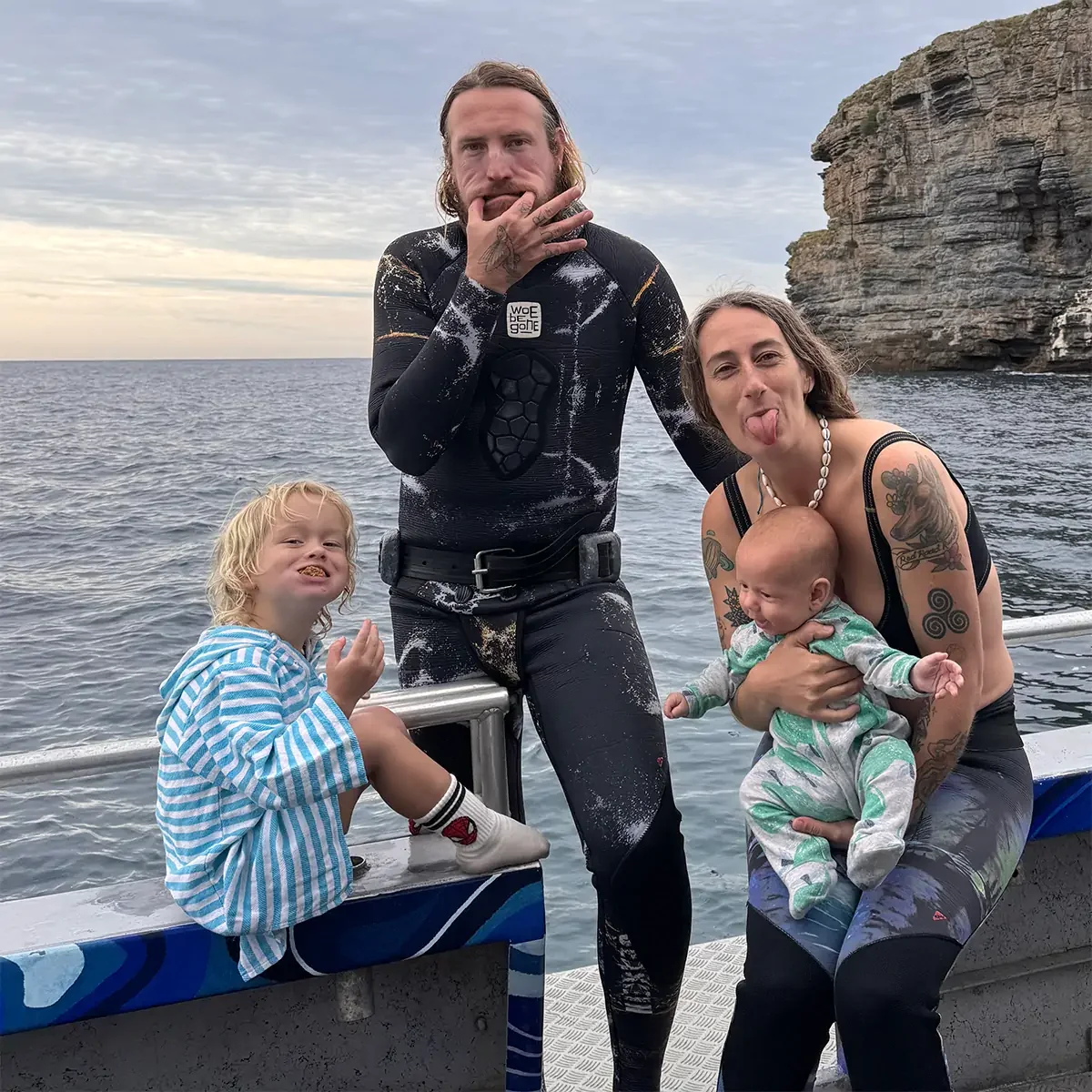
As we move into this next phase with the Woebe-Two and our growing scuba program, the goal remains the same as it was when we first started teaching freediving years ago: help people experience the ocean in a way that changes how they see it. Whether it's hearing whale song in deep blue water, watching a seal spin through your bubbles, or taking your very first breath underwater on scuba, those moments stay with people long after they leave the boat. And that, ultimately, is why we do it.